I decided on a whim to make a gown for a friend of mine who does drag. I didn't have a particular design in mind or an occasion I was making it for. I was scrolling through sewing patterns online when I came across Gunnar Deatherage's Calliope Dress. It caught my eye and I decided to give it a go. The Calliope is a dramatic gown with a V-neckline, bishop sleeves and a full skirt. There are several options for customizing it, including a train and different skirt lengths. It looked like an interesting project and something that would work well for drag. The fabric choice was equally spontaneous. I found a few options that looked promising and let my friend choose. He picked a brocade with an iridescent scale pattern that shifts between teal, blue and reddish copper depending on the light. It's a heavy fabric with a lot going on visually. The back of the brocade was rough, so I decided to use a soft, lightweight satin to make it more comfortable. I chose a red that picked up the reddish tones in the brocade. I also wanted the satin to be visible as a contrasting element rather than just hiding it inside the gown. The red waistband provides a break between the patterned bodice and skirt and brings out the color shift in the brocade.
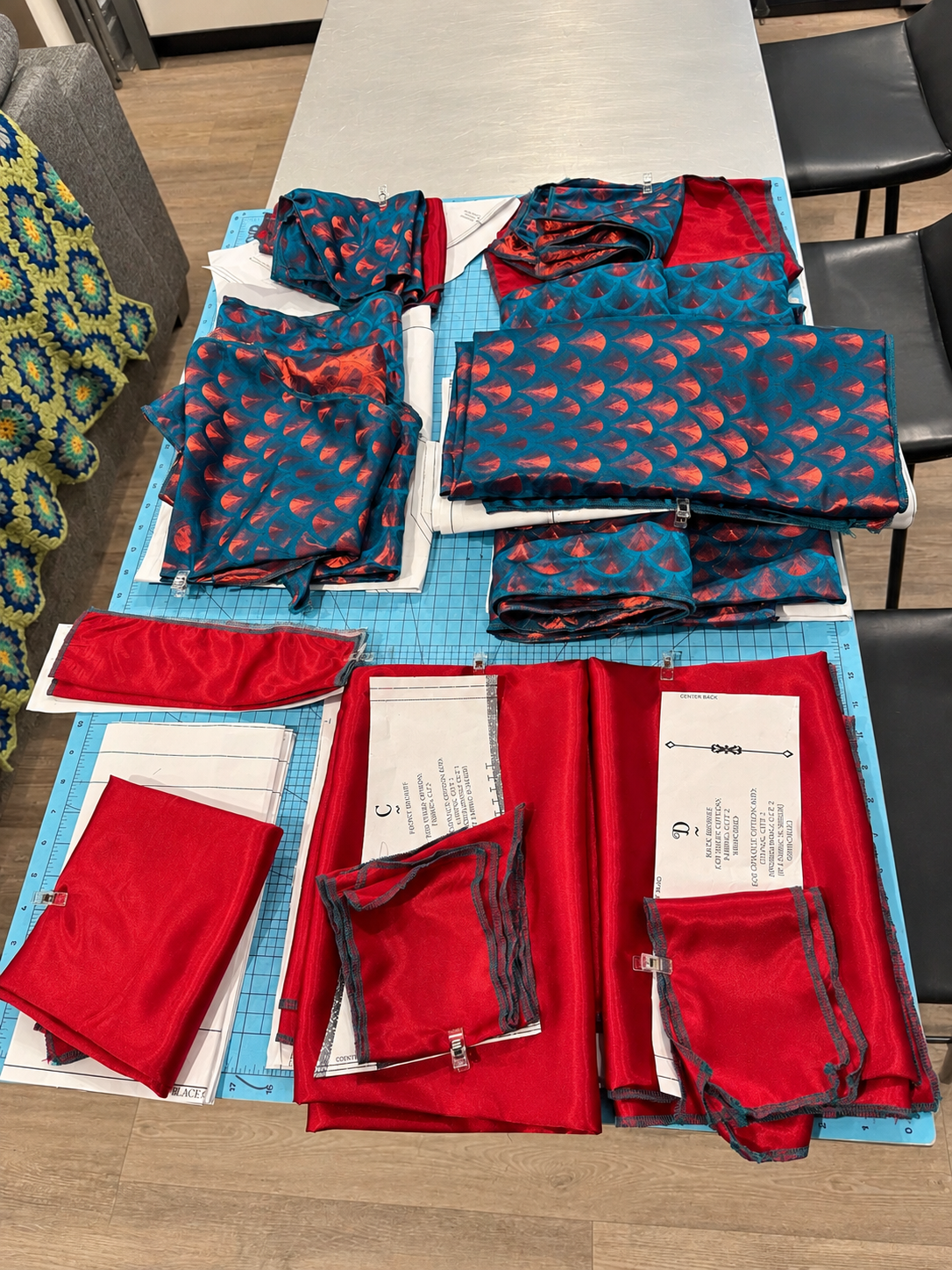
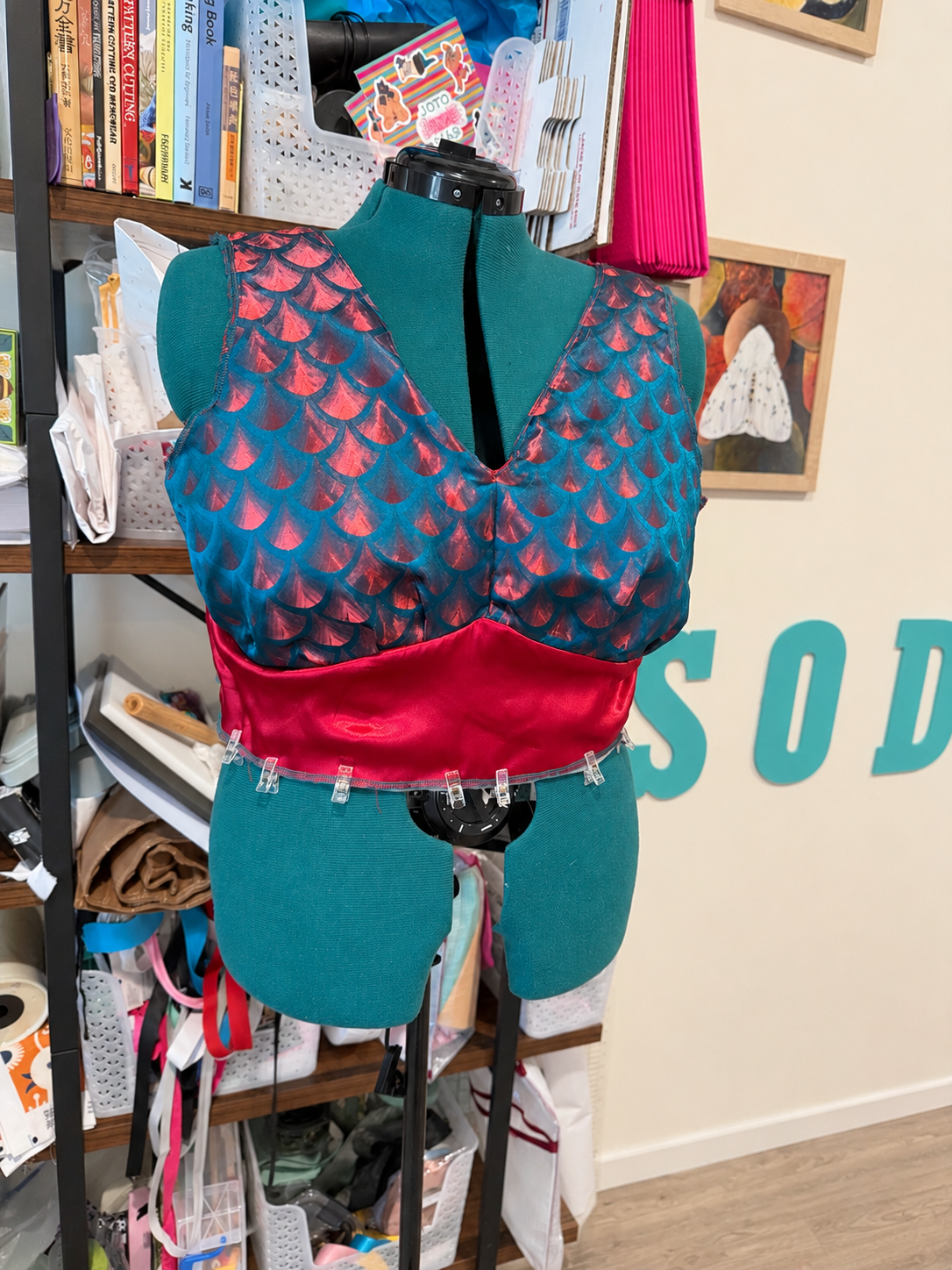
I didn't make a mockup for this project. My friend gave me his measurements and I selected the corresponding standard pattern size. Since I wasn't fitting the gown directly on him during construction, I was relying on those measurements and the pattern's sizing. Whether that was a sensible decision remains to be seen. Cutting the brocade was straightforward. The fabric was sturdy enough to handle easily and I didn't have any trouble getting the pieces cut. Sewing it was another matter. The thickness made some of the seams difficult to manage, particularly the curved ones. There was a lot of fabric to contend with in the seam allowances and getting everything to lie properly took some work. I ended up doing a lot of clipping and pressing to get the curves to behave. The clipping allowed the seam allowances to spread where necessary and repeated pressing helped reduce the bulk.
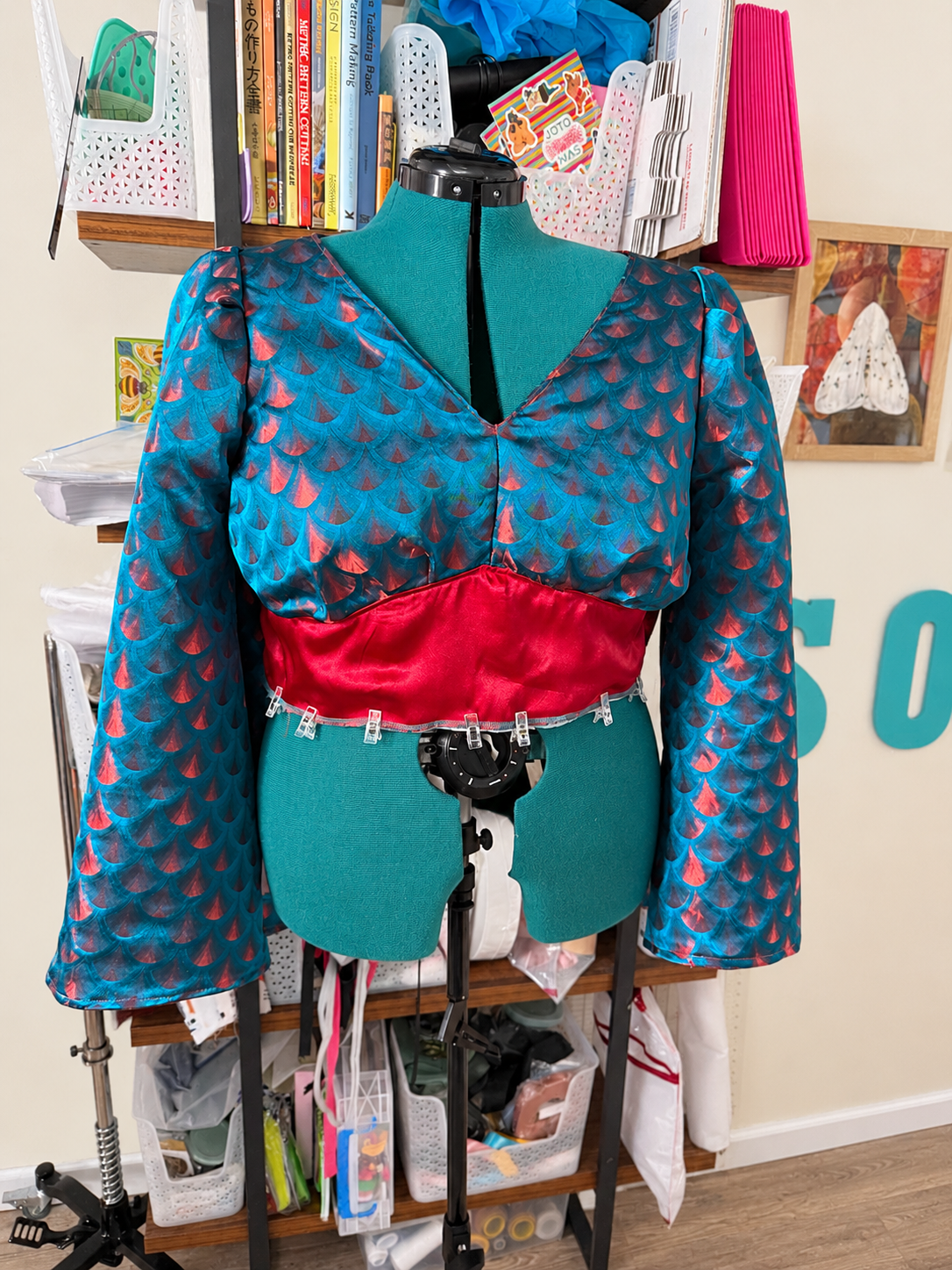
I also changed the sleeves from the original pattern. The Calliope has bishop sleeves gathered into cuffs, but neither of my fabrics was well suited to that construction. The satin didn't have enough structure and the brocade was too thick. Trying to gather that much brocade into a cuff wasn't something I wanted to deal with. Instead, I kept the sleeve pieces as drafted, omitted the cuffs and hemmed the openings. That gave me bell sleeves without having to redraft anything. It was a simple modification that worked with the fabric I had.
The pattern instructions were fine. I wouldn't call them difficult to follow. The accompanying video tutorials were still helpful. The pintucks were the main point where I needed the video. The written instructions didn't make the process clear to me, but once I'd watched it demonstrated I understood what I was supposed to do. The difficulty was understanding the construction, not sewing the pintucks. One of the less successful moments came while I was attaching the skirt lining to the bodice. I needed to correct an issue and was unpicking some stitching when my seam ripper slipped and tore the fabric. Unfortunately, fixing the tear properly would have required taking the whole dress apart. I wasn't interested in doing that, so I went with a more expedient solution and covered the damaged area with a brooch. It was a hacky fix, but the brooch ended up being a nice embellishment. It wasn't part of the original design and I wouldn't have added it if I hadn't damaged the fabric. Sometimes a cover-up works out.
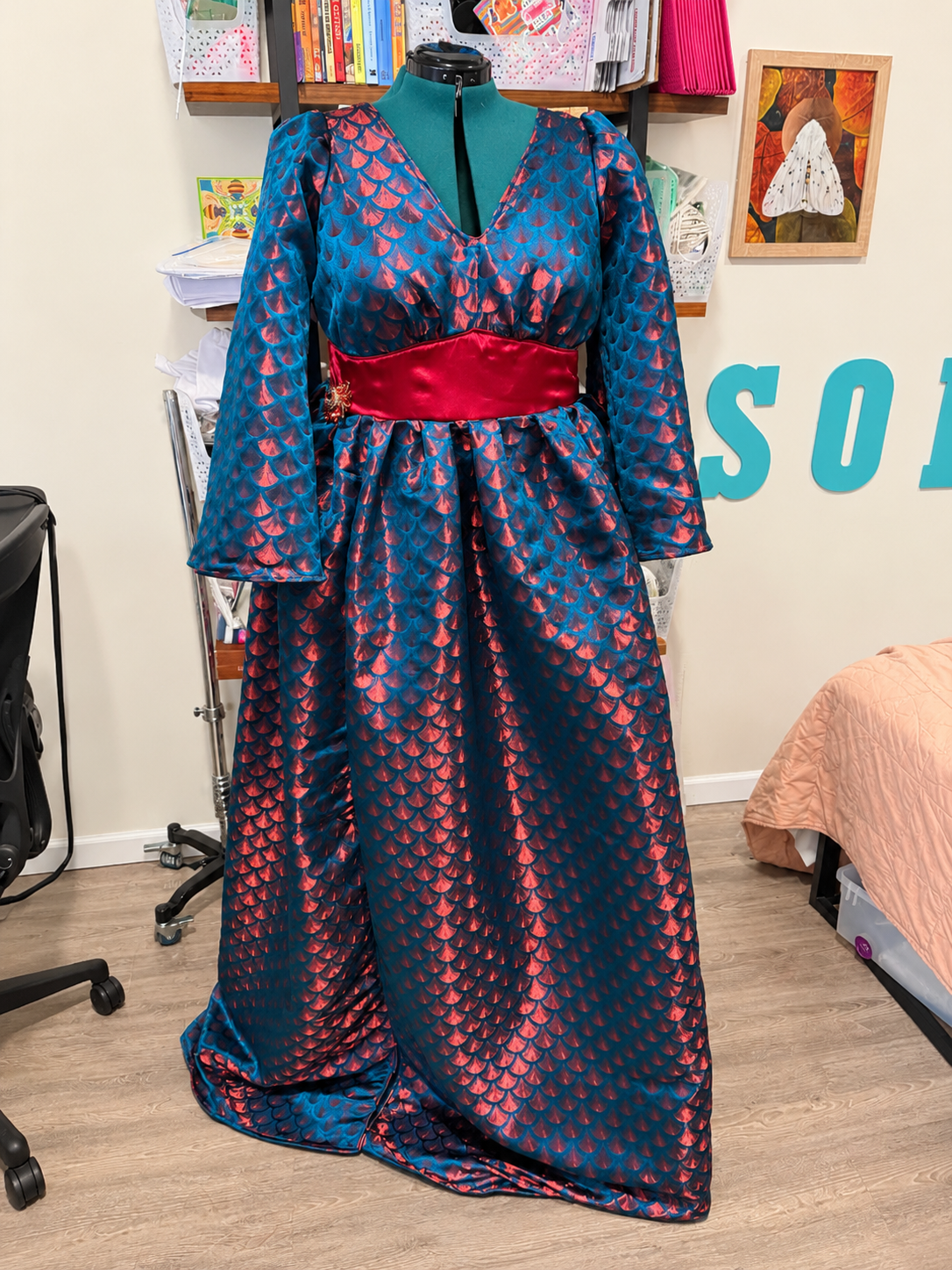
Looking at the finished gown, I have mixed feelings about it. I wish I'd chosen different fabric. The brocade looks good with the red satin, but its thickness made parts of the construction harder than they needed to be. There were also a few mistakes along the way that required improvised fixes rather than the sort of construction I'd have preferred. I don't think I'd make the Calliope again. Having worked through it, I'd be more inclined to take what I've learned and develop my own gown pattern. There are things about the construction and the way the fabrics behaved that I'd want to approach differently. The remaining question is the fit. My friend hasn't tried the gown on yet, so I don't know whether the standard size will work or if I'll need to make alterations. For now, the gown is finished and we'll see what happens when I get it on him.